Less manual work
Automate repetitive, document-heavy and coordination-heavy processes.
BAGAI connects AI, paid media, SEO, unified reporting, ecommerce and web technology to simplify operations, generate better-quality demand and create stronger digital growth.

Automate repetitive, document-heavy and coordination-heavy processes.
Improve how the business is found across search and digital channels.
Create clearer journeys from first visit to enquiry, lead or purchase.
Bring systems, data and workflows together so teams can act faster.

Strategy only matters when it turns into something measurable, usable and scalable.
BAGAI sits at the intersection of AI, SEO, websites, ecommerce, automation and digital strategy. The recommendation is shaped around the business problem—not restricted by a single platform, tool or channel.
Whether the priority is search visibility, a faster ecommerce experience, an AI-enabled workflow, a stronger website or better-connected systems, the focus stays on practical implementation and long-term value.
Start with one priority or connect several workstreams into a single growth and technology roadmap.

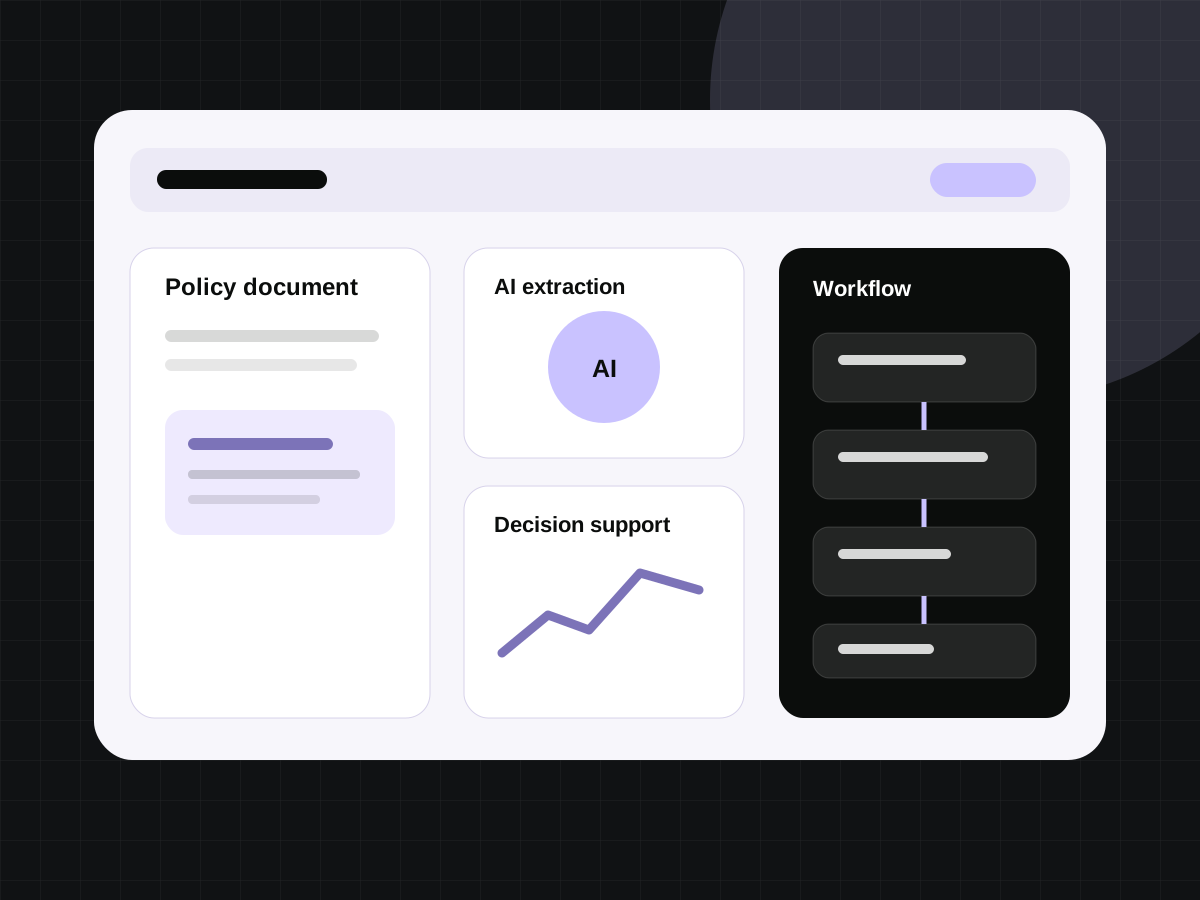
AI assistants and chatbots, lead qualification, workflow automation, document intelligence, internal tools and practical AI integration.
Explore AI & automation →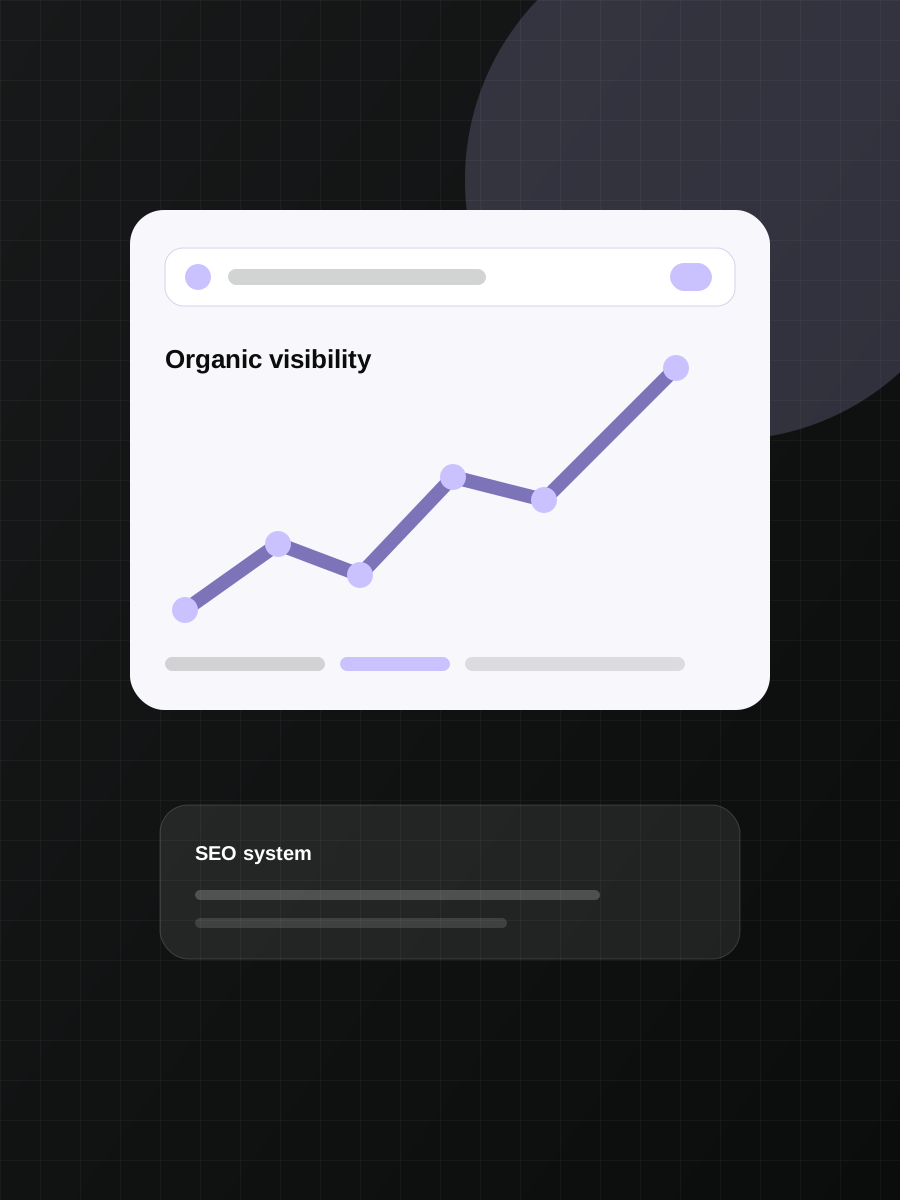
Technical SEO, Search Console analysis, Screaming Frog crawls, Semrush research, content architecture and organic growth.
Explore SEO consulting →Google Ads, Meta and TikTok strategy, tracking, funnel analysis, lead quality, SQL measurement, creative testing and ongoing optimisation.
Explore paid media →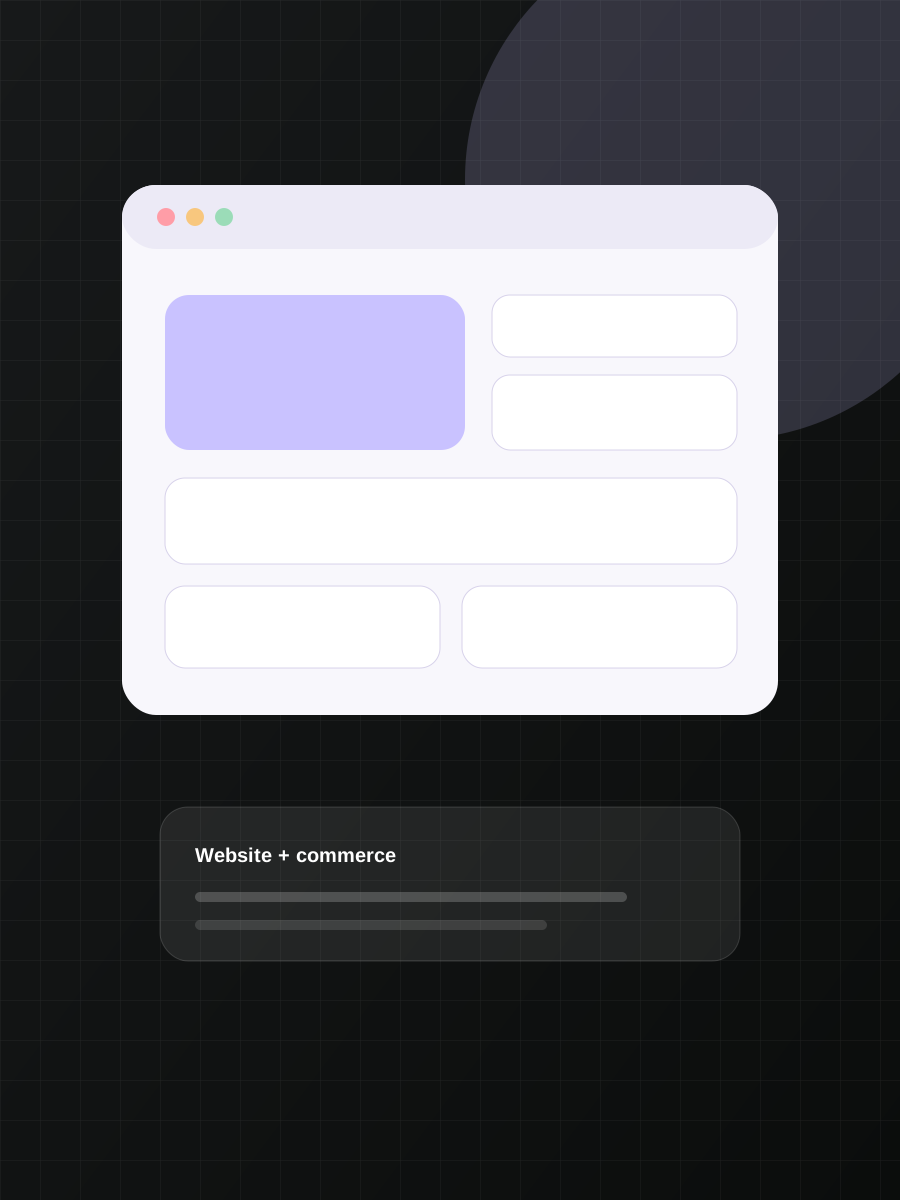
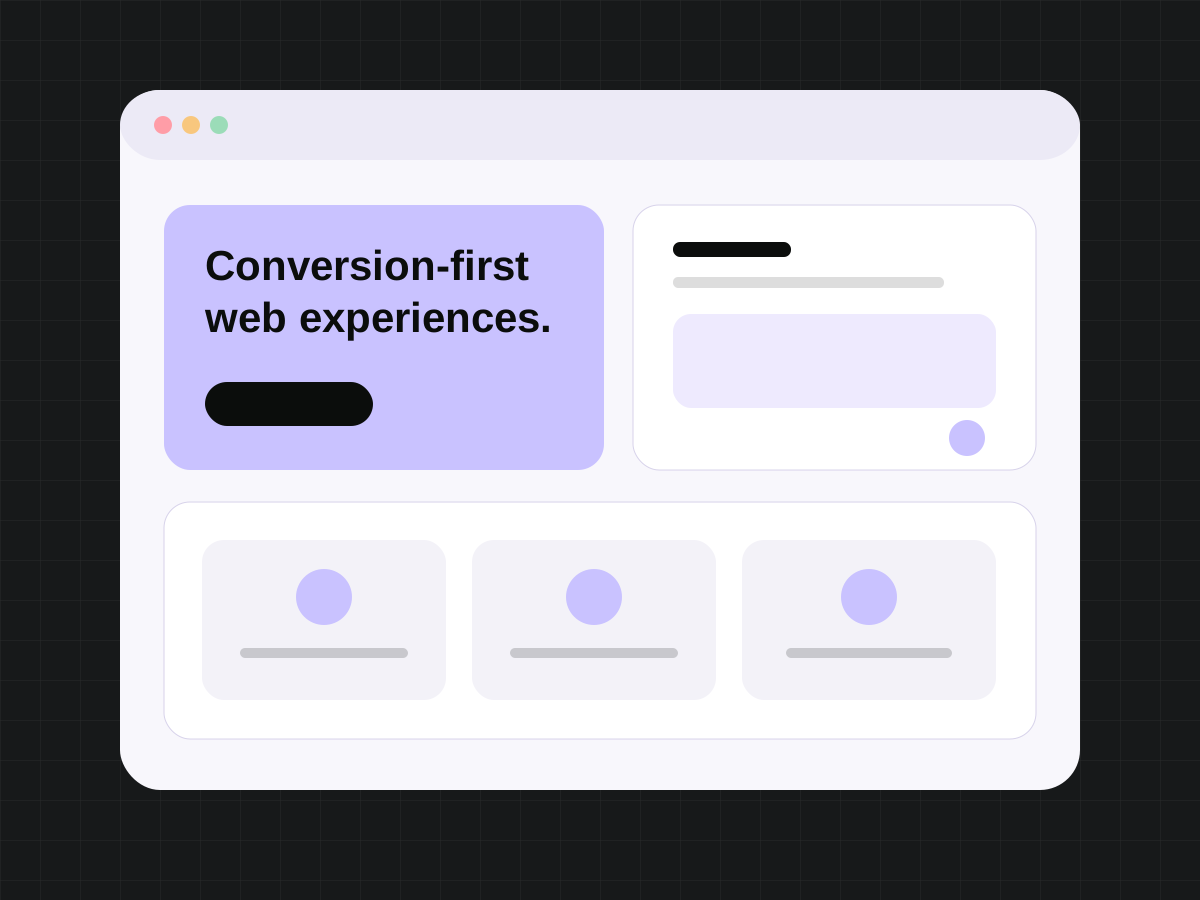
WordPress, WooCommerce, Shopify, BigCommerce, landing pages, integrations and conversion-focused builds.
Explore web & growth →The strongest digital opportunities usually sit between marketing, technology, data and operations. I help connect those pieces instead of treating them as separate projects.
Campaigns are managed as a connected growth system: traffic quality, tracking, landing experience, lead qualification, CRM stages, sales outcomes and revenue—not just platform-reported cost per lead.
For lead-generation businesses, MQL means Marketing Qualified Lead and SQL means Sales Qualified Lead. The reporting model can follow the customer from initial demand through to qualified pipeline and closed revenue.
Search, Performance Max, Demand Gen and Shopping can be structured around the customer journey, conversion quality and the economics of the business—not simply click volume.
Facebook and Instagram campaigns can combine disciplined manual testing with Meta's Advantage+ automation, while keeping creative, signal quality and downstream sales outcomes visible.
TikTok can be used as more than an awareness channel. Manual and Smart+ setups, Search campaigns, Spark Ads and conversion tracking can be aligned to lead generation or ecommerce outcomes.
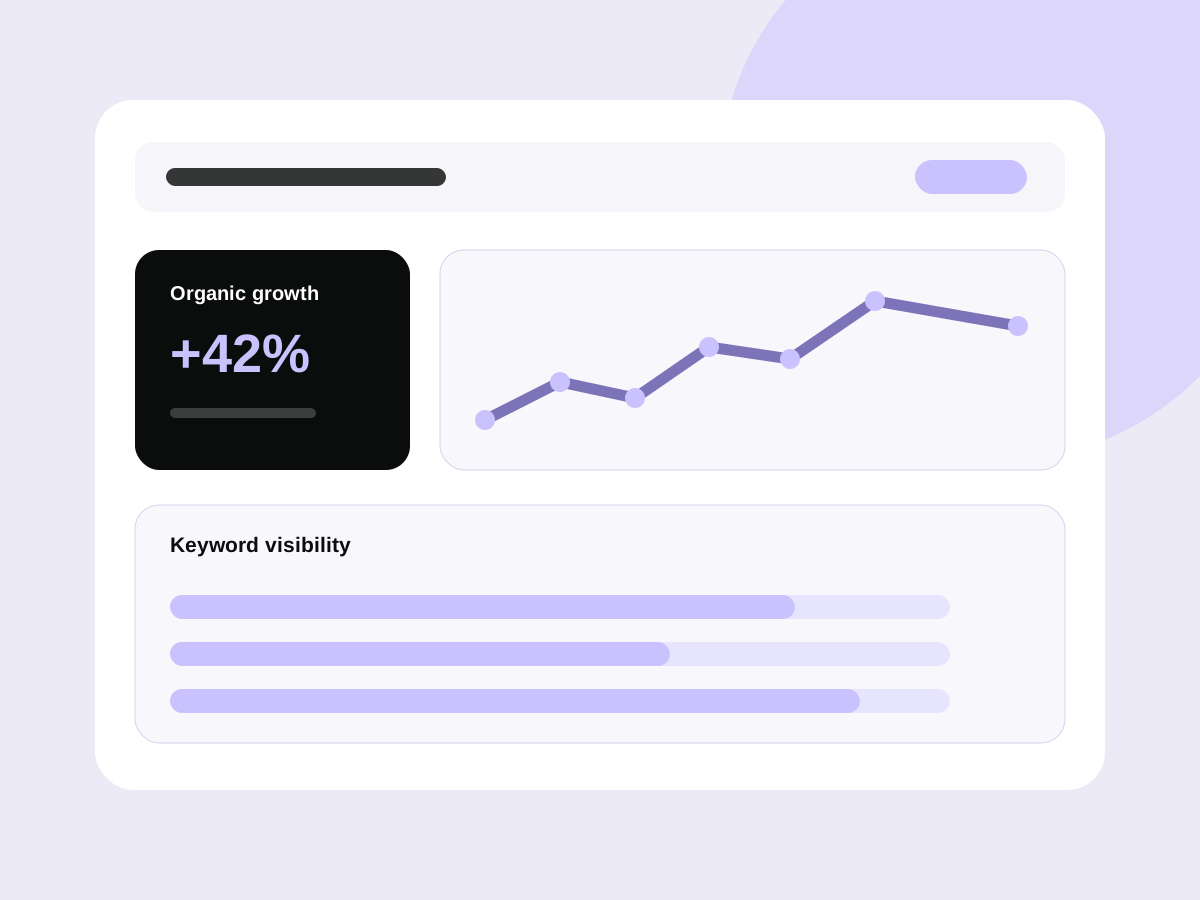
SEO work connects technical crawl data, Google Search Console demand signals, competitor intelligence and content architecture to prioritise what is most likely to improve discoverability and conversion.
For smaller businesses, the goal is a leaner system: track what matters, focus spend where intent is strongest and build a marketing engine that can actually be operated month to month.
Google Search, Meta lead/website campaigns and TikTok where the audience fits—supported by landing pages, call/form tracking and CRM stage mapping.
Local SEO, Google Business Profile, service-area content, location targeting, call-focused campaigns and search-query analysis.
Shopping/PMax, Meta and TikTok sales campaigns, product-feed quality, remarketing, conversion rate, AOV and revenue efficiency.
A reporting view that connects spend to leads, MQLs, SQLs, sales and revenue—with clear actions instead of a dashboard full of vanity metrics.
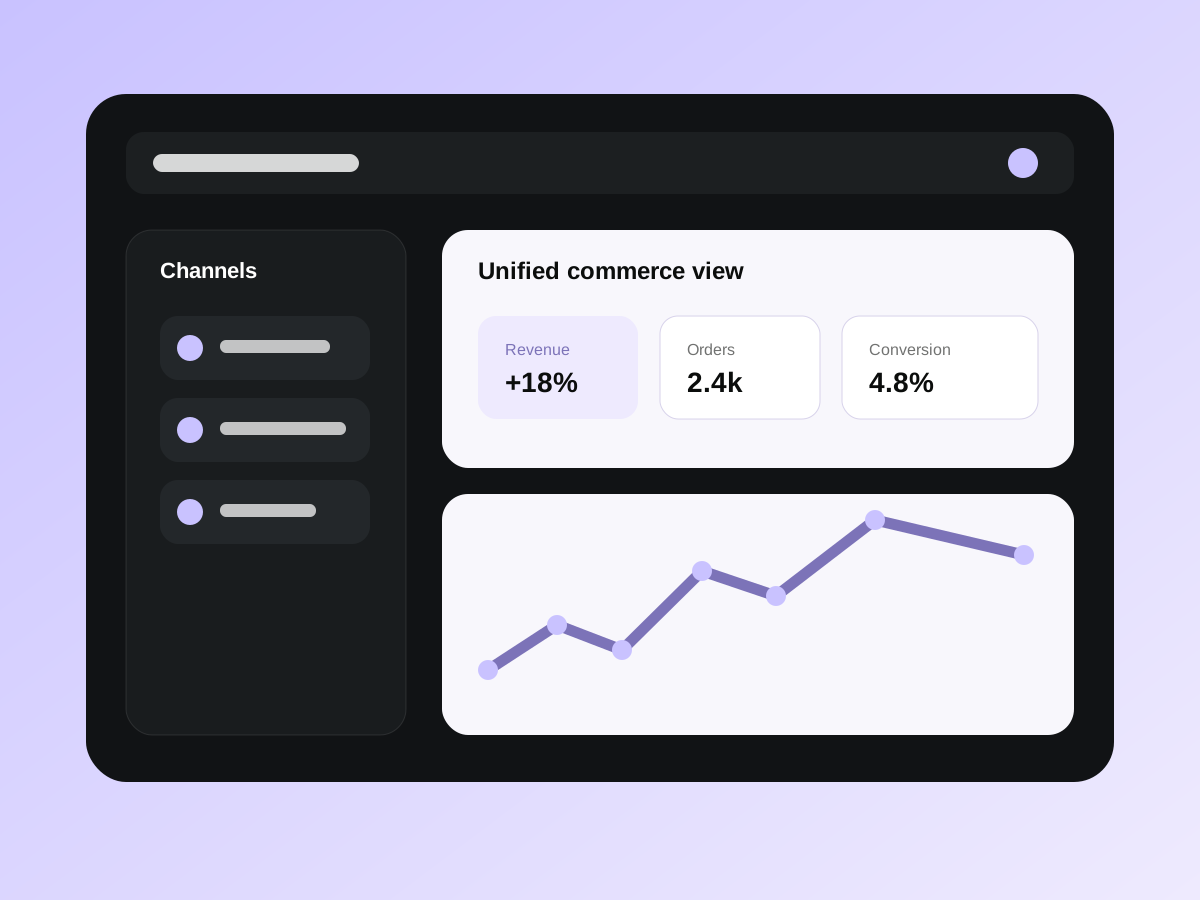
Bring paid media, search, website, ecommerce and CRM data into a single decision layer. Dashboards can be built for owners, marketing teams or sales teams, with the metrics that matter to each role.
| Channel | Spend | Leads | SQL | Cost / SQL | Revenue | ROAS |
|---|---|---|---|---|---|---|
| Google Ads | $9,200 | 148 | 46 | $200 | $41,800 | 4.54x |
| Meta | $6,400 | 132 | 28 | $229 | $28,700 | 4.48x |
| TikTok | $2,800 | 46 | 10 | $280 | $15,700 | 5.61x |
This reporting view is illustrative and does not represent client results. Live dashboards are built around the business's actual channels, CRM structure, data quality and decision needs.
Connect ad platforms, analytics, search, ecommerce, call tracking and CRM data where access is available.
Separate vanity metrics from commercial KPIs such as SQL rate, CAC, revenue, margin and organic opportunity.
Use exception flags, trend views and action queues so the dashboard changes what the business does next.
Representative work across AI platforms, ecommerce intelligence, SEO systems and conversion-focused websites.
You get one connected view across strategy, marketing, technology and implementation—with the work staying close to the business objective.
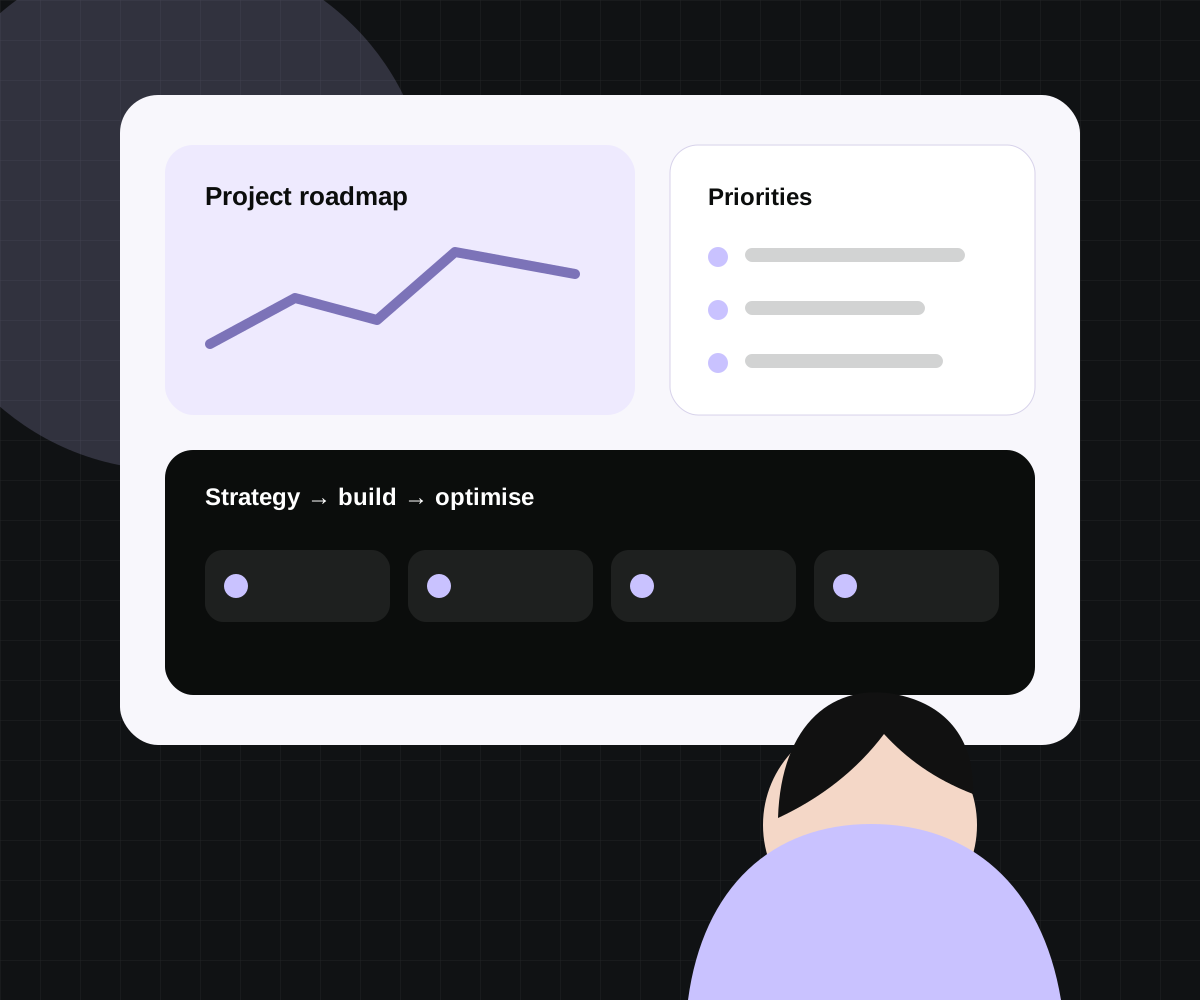
Clarify the objective, audience, constraints, existing systems and the real problem behind the brief.
Identify the highest-value opportunities, technical approach, roadmap and what does not need to be built yet.
Design and implement the website, automation, growth system or integration with feedback built into the process.
Measure performance, refine the system and identify the next practical improvement using real usage data.
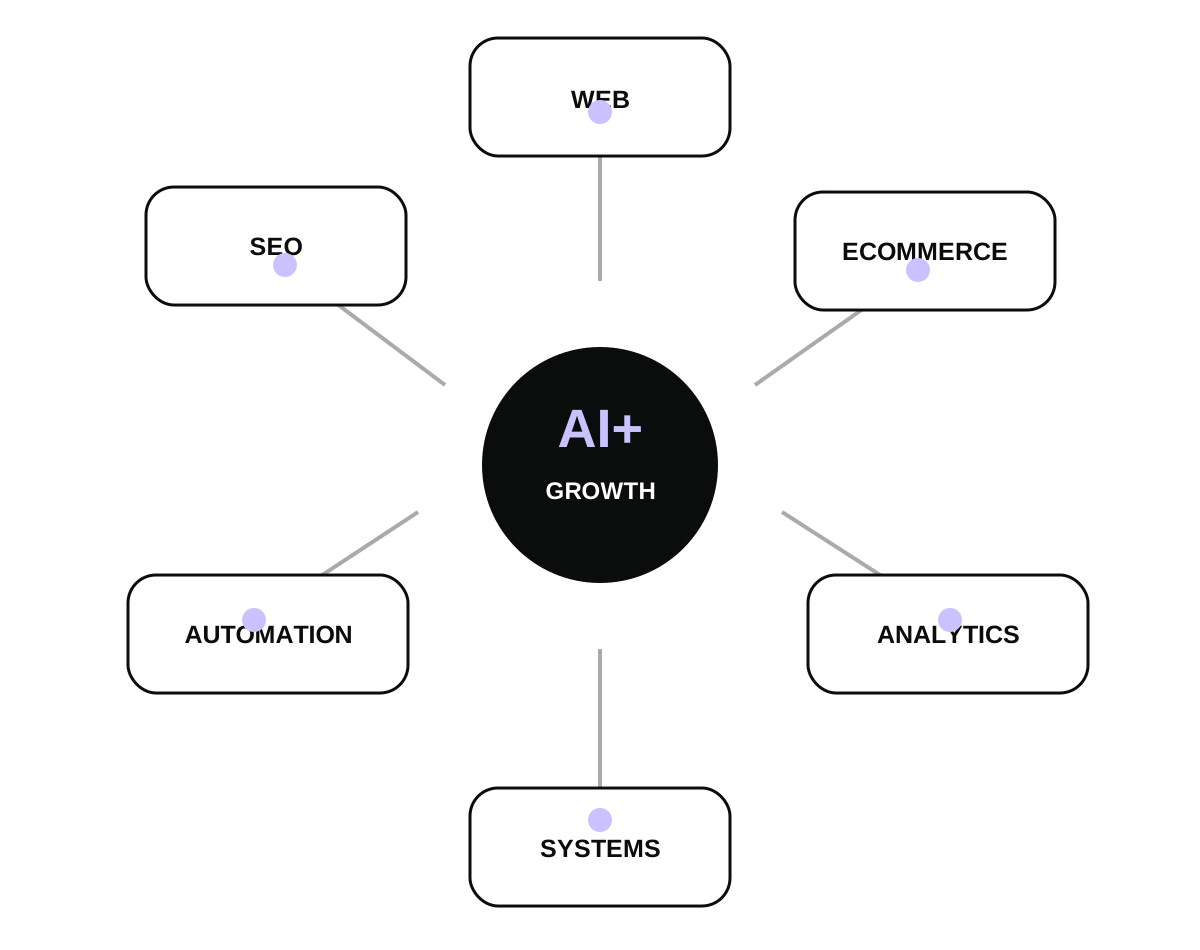
Useful when the opportunity does not fit neatly inside one discipline—which is often where the most valuable work sits.
The aim is not to add more tools, more meetings or more complexity. BAGAI focuses on useful systems that make the business easier to operate, easier to find and easier to buy from.
Define the problem, the user and the success criteria before choosing the technology.
Remove repetitive friction while keeping the workflow practical, controlled and usable.
Launch, measure, learn and refine so the system compounds instead of becoming shelfware.
Use BAGAI to assess marketing maturity, inspect funnel economics, identify likely tracking or lead-quality gaps, qualify the enquiry, and match the problem to the right service path.
For businesses that need clarity before committing to a build or major change.
For projects that need strategy translated directly into a working solution.
For businesses that want continuous improvement rather than a one-off launch.
A few practical questions that usually come up before a new engagement.
Projects across AI and automation, Google Ads, Meta Ads, TikTok Ads, SEO, websites, ecommerce, analytics, integrations and broader digital growth. I can work on one focused problem or connect acquisition, search, tracking and technology into a more integrated growth system.
Yes. I can work directly with owners and leadership or collaborate with internal marketing, development, sales and operations teams. I can also plug into an existing agency relationship where specialist strategy or implementation is needed.
Absolutely. A rebuild is not always the right answer. I can audit the current platform, identify SEO, speed, UX, conversion and architecture issues, then prioritise improvements based on likely value and effort.
Often, yes. The best starting point is usually a repetitive, document-heavy or decision-support workflow. I look at where AI can reduce manual effort or improve consistency without introducing unnecessary operational risk.
I do not use fixed public pricing because scope varies significantly. After understanding the objective and requirements, I recommend the right engagement structure and provide a clear proposal.
Yes. Engagements can cover strategy, account structure, tracking, creative/testing plans, weekly optimisation and deeper monthly analysis. The exact channel mix depends on audience, economics, sales cycle and whether the business has enough conversion signal to justify automation.
Yes. For lead-generation businesses I can structure reporting around stages such as Lead → MQL → SQL → Sale, then analyse cost per SQL, qualification rate, close rate, CAC and revenue where CRM or offline conversion data is available. That gives a much better view than optimising every form fill as if it had equal value.
It can guide service discovery, calculate funnel economics, run a structured growth assessment and turn the result into a more useful project brief. Assessment answers remain in the browser unless you choose to include them in an enquiry.
Yes. A unified dashboard can combine Google Ads, Meta, TikTok, GA4, Search Console, ecommerce and CRM data, then surface the KPIs each team actually needs. The exact build depends on source access and data quality, but the aim is a single decision view rather than separate platform screenshots.
Practical notes on AI, search, ecommerce and digital systems—focused on decisions that affect real operations and growth.
Tell me what you are trying to improve, build or automate. The first response will focus on the most useful next step—not a generic sales pitch or unnecessary technology.